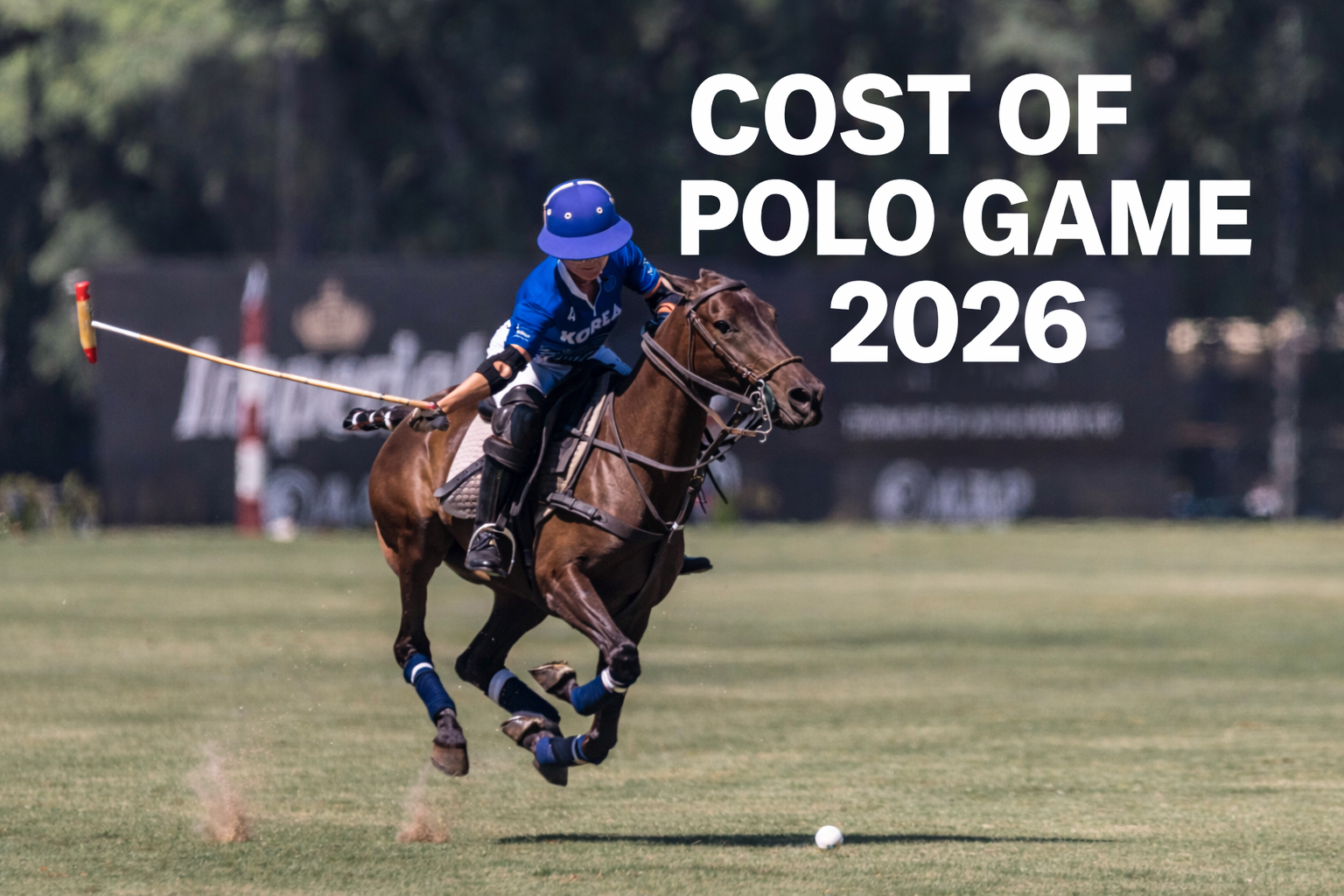
Polo has long been known as the "Sport of Kings," but in 2026 the reality is more nuanced. While elite players can spend hundreds of thousands—or even millions—of dollars annually, modern polo schools, horse-rental programs, and club chukkers have made the sport significantly more accessible than many people assume.
The real question is not whether polo is expensive, but where you choose to play.
A beginner learning polo in Argentina can spend less in an entire season than a player in England or the United States might spend in a few months. Differences in horse costs, labor, land, club fees, and access to polo ponies create some of the largest pricing gaps in global sport.
This article compares the actual cost of playing polo in the United States, England, and Argentina in 2026, using publicly available pricing data from polo clubs, industry reports, and equestrian cost surveys.
Why Polo Costs So Much
Unlike golf, tennis, or skiing, polo is a sport that depends on horses. A competitive player typically uses multiple horses during a match, and even recreational players must account for riding instruction, horse care, transportation, equipment, and club membership.
The largest expenses usually include:
- Polo lessons
- Horse rental or ownership
- Club memberships
- Boarding and livery
- Veterinary care
- Farrier services
- Equipment and safety gear
- Tournament and travel fees
For most beginners, horse ownership is unnecessary. Many polo schools and clubs provide trained polo ponies, reducing the financial barrier to entry dramatically.
Average Cost of Polo Lessons in 2026
The easiest way to compare countries is by looking at lesson prices.
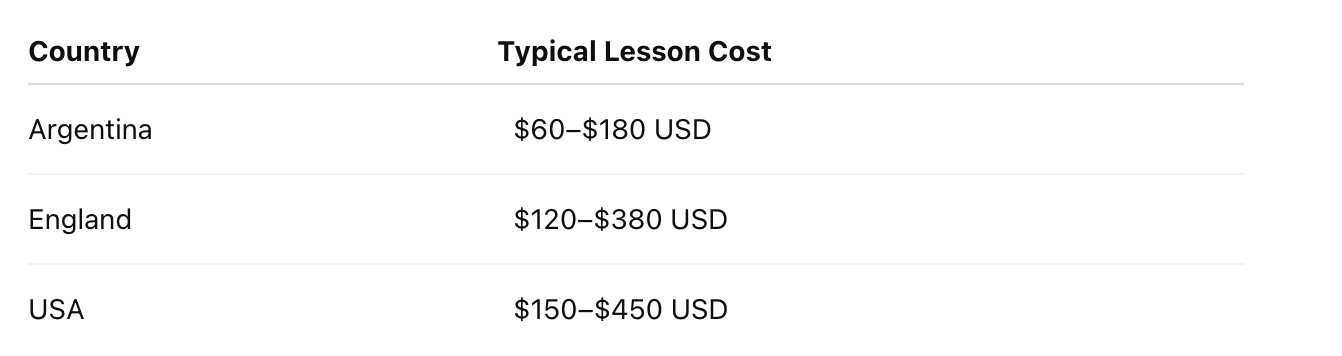
Argentina remains the most affordable destination to learn polo. Provinces outside Buenos Aires often offer lessons for under $100 USD, while premium clubs in Florida, London, and the Home Counties frequently exceed $250–$400 per session.
Cost of Playing Without Owning a Horse
Most new players start by renting horses from polo schools.
Argentina
- Horse rental per chukker: $50–$180 USD
- Practice session: $100–$300 USD
- Beginner annual budget: approximately $3,000–$8,000 USD
Argentina benefits from the world's largest population of polo ponies, lower labor costs, and extensive polo infrastructure. Many clubs offer complete packages that include horses, coaching, and match play.
England
- Horse rental per chukker: $160–$400 USD equivalent
- Club practice: $200–$500 USD
- Beginner annual budget: approximately $8,000–$20,000 USD
England is home to some of the world's most prestigious clubs, including Guards Polo Club and Cowdray Park Polo Club. The prestige comes with higher operating costs, particularly for horse care and club membership.
United States
- Horse rental per chukker: $150–$350 USD
- Practice session: $200–$600 USD
- Beginner annual budget: approximately $7,000–$17,500 USD
Florida, California, and Texas dominate the American polo scene. Clubs often provide horse-rental programs, allowing players to participate without maintaining a personal string of horses.
Annual Club Membership Costs
Membership fees vary dramatically depending on location and club prestige.

Prestigious English clubs frequently charge between £2,000 and £8,500 annually, while major American clubs can exceed $15,000 per year. Argentine clubs are generally much more affordable and often focus on active participation rather than exclusivity.
What If You Own Polo Horses?
Horse ownership is where polo becomes truly expensive.
A recreational player generally needs at least 2–4 horses. Competitive players may maintain 6–12 horses or more.
England
Annual horse ownership costs can range from $8,000 to over $30,000 USD per horse when livery, feed, veterinary care, insurance, and farrier expenses are included. Full-service livery operations near London are among the most expensive in the world.
United States
Owners typically spend $10,000–$25,000 USD annually per horse depending on region, boarding arrangements, and competition schedule. Additional transportation costs can be significant.
Argentina
Comparable horse-care services often cost 30–60% less than in England or the United States. Argentina's abundance of polo professionals, feed resources, and breeding operations keeps ownership costs relatively low.
Total Annual Cost Comparison
The following estimates assume a recreational player who participates regularly but is not competing professionally.
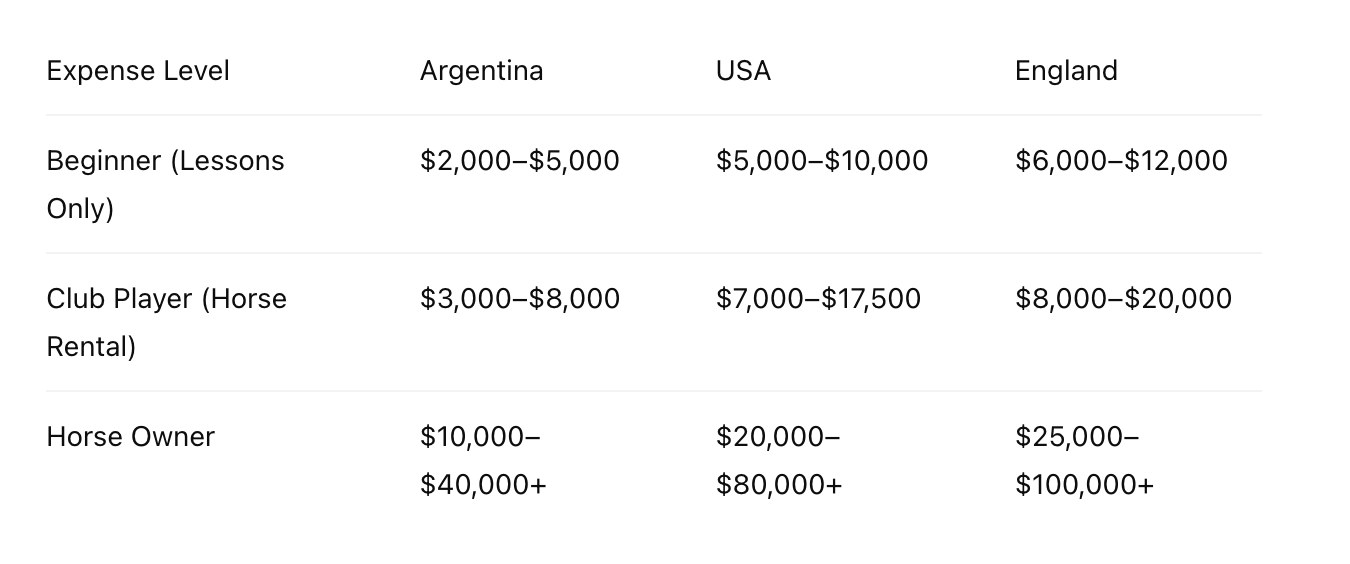
These estimates can increase substantially for tournament travel, professional coaching, horse purchases, and higher-goal competition. Elite patrons routinely spend hundreds of thousands of dollars annually, while top professional operations can exceed seven figures.
What If You Own Polo Horses?
Horse ownership is where polo becomes truly expensive.
A recreational player generally needs at least 2–4 horses. Competitive players may maintain 6–12 horses or more.
England
Annual horse ownership costs can range from $8,000 to over $30,000 USD per horse when livery, feed, veterinary care, insurance, and farrier expenses are included. Full-service livery operations near London are among the most expensive in the world.
United States
Owners typically spend $10,000–$25,000 USD annually per horse depending on region, boarding arrangements, and competition schedule. Additional transportation costs can be significant.
Argentina
Argentina remains the most affordable major polo nation for horse ownership. A polo pony can typically be maintained for approximately $6,000 USD per year, including boarding, feed, routine veterinary care, vaccinations, farrier services, and basic conditioning. Costs may vary between regions and clubs, but they are generally far lower than in England or the United States.
The country's extensive polo infrastructure plays a major role in keeping expenses manageable. Argentina is home to thousands of polo ponies, experienced trainers, grooms, veterinarians, and breeding operations, creating a highly efficient ecosystem that benefits players at every level.
For recreational players, maintaining a string of four polo ponies would cost roughly $24,000 USD annually, while an equivalent setup could easily exceed $50,000–$100,000 in the United States or England. This affordability is one of the main reasons why international players travel to Argentina to train, compete, and keep horses during the polo season.
Total Annual Cost Comparison
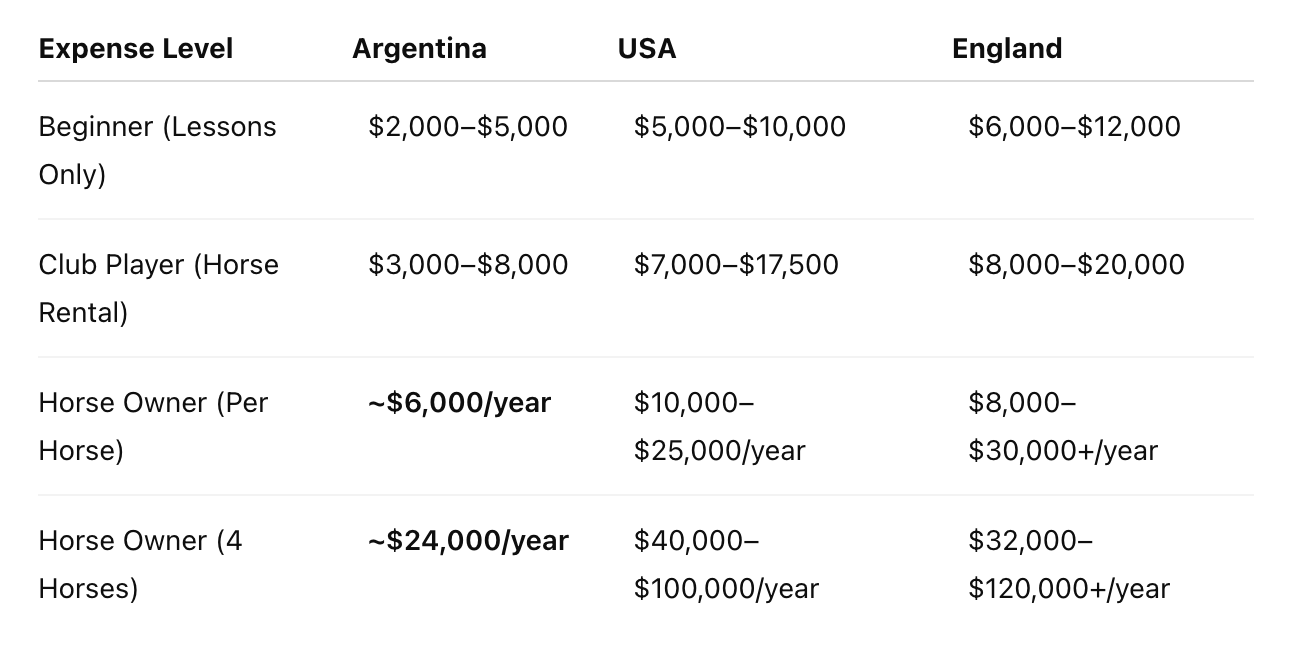
The following estimates assume a recreational player who participates regularly but is not competing professionally.
These estimates can increase substantially for tournament travel, professional coaching, horse purchases, and higher-goal competition. Elite patrons routinely spend hundreds of thousands of dollars annually, while top professional operations can exceed seven figures.
These estimates can increase substantially for tournament travel, professional coaching, horse purchases, and higher-goal competition. Elite patrons routinely spend hundreds of thousands of dollars annually, while top professional operations can exceed seven figures.
Why Argentina Is the Best Value for Polo
Argentina is widely recognized as the global capital of polo. The country produces many of the world's best players, breeds thousands of polo ponies, and hosts the most prestigious tournaments.
For international players, Argentina offers a rare combination:
- Lower lesson prices
- Affordable horse rental
- Reduced boarding costs
- High-quality coaching
- Year-round polo opportunities
- Access to elite polo culture
As a result, many players from the United States and England travel to Argentina to improve their game while spending significantly less than they would at home.
The Bottom Line
So, how much does polo cost in 2026?
If your goal is simply to learn and play recreationally, polo can be surprisingly accessible. A beginner in Argentina may start playing for only a few thousand dollars per year, while similar participation in England or the United States typically costs two to four times more.
For anyone considering their first polo experience, Argentina remains the clear winner on value. It offers some of the world's best coaching, horses, and facilities at a fraction of the cost found in traditional polo centers such as England and the United States.
The reputation of polo as a millionaire's sport is not entirely undeserved—but thanks to modern polo schools and horse-rental programs, joining the game no longer requires owning a stable full of horses. The country where you choose to play matters far more than the sport itself.
