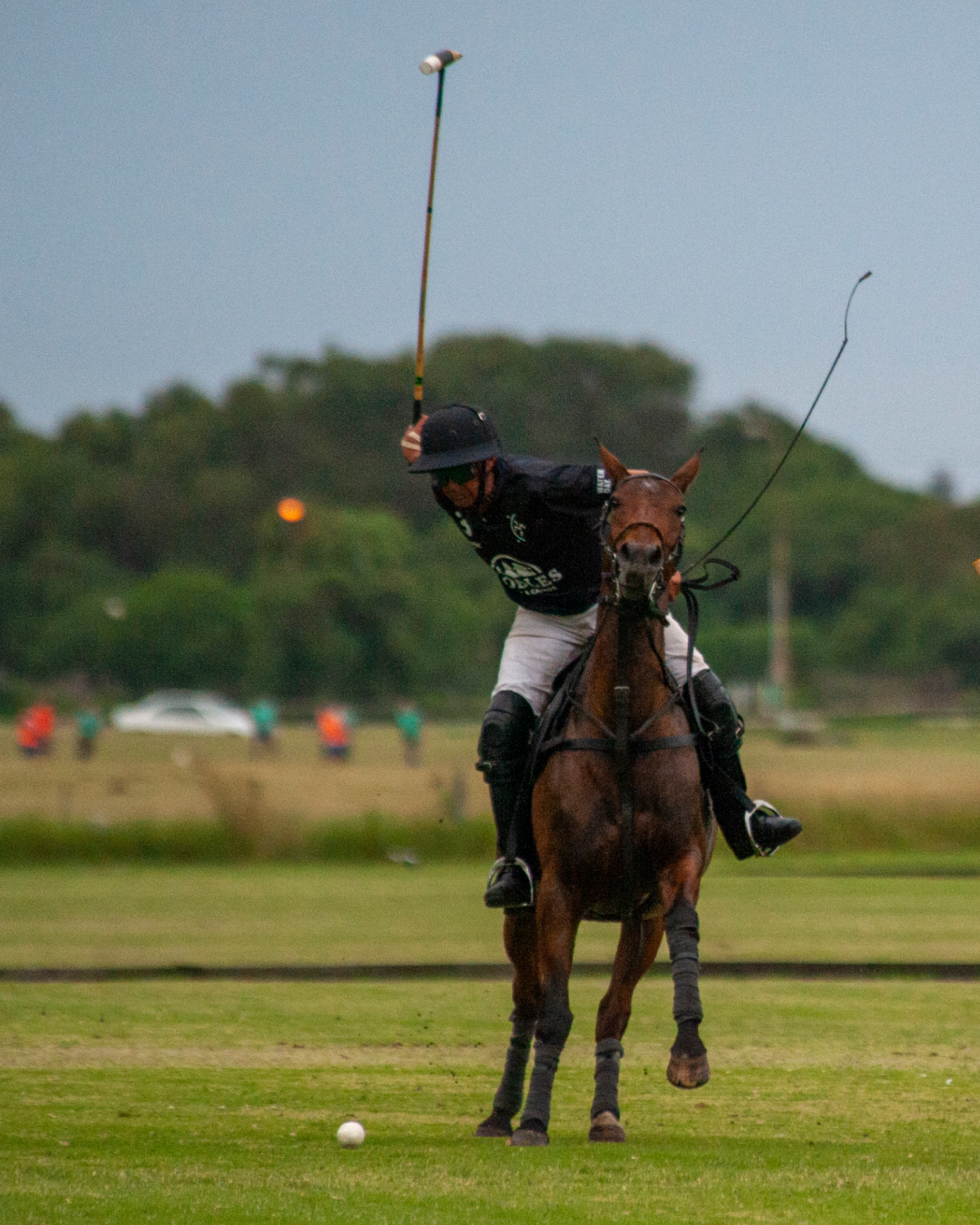
If you're interested in learning polo, understanding the basic rules is the first step toward enjoying this exciting sport. Whether you're planning to watch a match or take lessons at the renowned Argentina Polo School in Mar del Plata, knowing how the game works will help you appreciate the skill, strategy, and horsemanship that make polo one of the world's most thrilling sports.
What Is Polo?
Polo is a fast-paced team sport played on horseback. Two teams of four players compete to score goals by hitting a small ball through the opposing team's goalposts using long-handled mallets.
Often called the "Sport of Kings," polo combines athleticism, teamwork, strategy, and exceptional riding skills.
The Objective of the Game
The main objective is simple:
- Score more goals than the opposing team.
- Hit the ball between the opponent's goal posts.
- Work as a team to create scoring opportunities while defending your own goal.
The team with the most goals at the end of the match wins.
Basic Polo Rules
1. Teams Consist of Four Players
Each team has four players on the field.
Traditional player positions include:
- Number 1: Primarily offensive player.
- Number 2: Attacking and supporting role.
- Number 3: Team strategist and playmaker.
- Number 4: Defensive specialist.
Every player contributes both offensively and defensively throughout the game.
2. Polo Matches Are Divided Into Chukkas
A polo game is divided into periods called chukkas.
- Most matches have 4 to 8 chukkas.
- Each chukka lasts approximately 7 minutes.
- There are short breaks between chukkas.
Because polo is physically demanding for horses, players usually change horses between chukkas.
The Right of Way Rule
One of the most important basic polo rules is the Line of the Ball.
When the ball is hit, it creates an imaginary line in the direction it travels.
Players must not cross this line in a way that creates a dangerous situation for horses or riders.
This rule helps maintain safety and fairness throughout the game.
Legal Player Contact
Polo allows controlled physical contact.
Players may:
- Ride-off opponents shoulder-to-shoulder.
- Use their horses to challenge for position.
- Hook an opponent's mallet under specific conditions.
However, dangerous riding, excessive force, or unsafe maneuvers are penalized.
Fouls and Penalties
Common fouls include:
- Crossing the Line of the Ball dangerously.
- Riding into another player at an unsafe angle.
- Hooking illegally.
- Dangerous riding.
When a foul occurs, the umpire may award a penalty shot to the opposing team.
Penalty shots vary in distance depending on the severity of the infringement.
How Scoring Works
A goal is scored when the ball passes completely between the goal posts.
After each goal:
- Teams immediately switch ends of the field.
- Play restarts from the center.
Switching ends helps balance field conditions such as wind and sunlight.
Polo Field Dimensions
A regulation outdoor polo field is one of the largest playing surfaces in sports.
Typical dimensions:
- Length: Up to 300 yards (274 meters)
- Width: Up to 160 yards (146 meters)
This large field allows for high-speed play and long strategic passes.
What Equipment Is Used?
Players wear:
- Polo helmet
- Knee guards
- Polo boots
- Team jersey
- White polo trousers
Essential equipment includes:
- Polo mallet
- Polo ball
- Saddles and horse tack designed for polo
Safety equipment is mandatory at all levels of the sport.
Why Beginners Should Learn the Rules
Understanding basic polo rules helps new players:
- Play more safely.
- Improve decision-making.
- Develop better positioning.
- Enjoy watching professional matches.
- Progress faster during lessons.
Many beginners find that once they understand the Line of the Ball and player positioning, the game becomes much easier to follow.
Where to Learn Polo
For those interested in learning polo from experienced instructors, Argentina Polo School in Mar del Plata offers beginner-friendly programs that teach riding skills, horse management, game strategy, and the basic rules of polo. Students from around the world visit Argentina to experience authentic polo culture and learn the sport in one of its most famous countries.
Final Thoughts
Learning the basic rules of polo is the foundation for enjoying one of the most exciting equestrian sports in the world. From understanding the Line of the Ball to learning how goals are scored and penalties are awarded, mastering these fundamentals will help you become a better player and a more knowledgeable spectator.
Whether you're watching your first match or preparing for your first lesson, a solid understanding of polo rules will make the experience far more rewarding.
